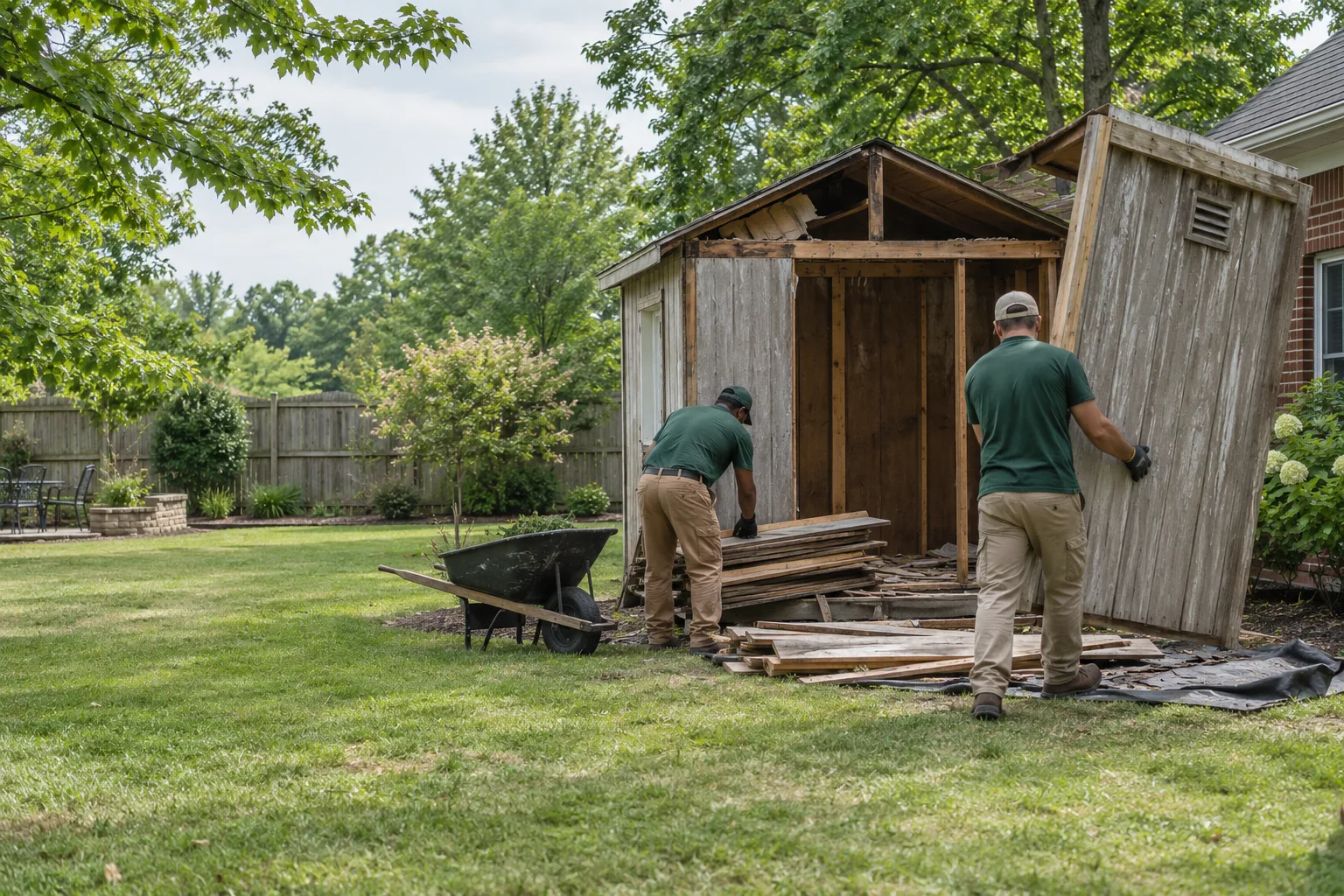
Sort the contents before demolition so the structure, floor, utilities, and base can be seen. You do not need to empty every shelf alone, but you should identify what stays and flag anything that does not belong in an ordinary junk load.
Make three zones
| Zone | Examples |
|---|---|
| Keep | Tools, records, reusable equipment, and personal items |
| Remove | Approved household clutter, loose shelving, and empty containers |
| Special handling | Fuel, paint, pesticides, batteries, propane, and unknown liquids |
Reveal the edges of the floor
Clear a visible strip near the walls when the floor is sound enough to enter. Photos of that edge can reveal rot, anchors, conduit, or a molded base. Do not step onto a soft or unstable floor for a better photo.
Photograph heavy and fixed items
Show lawn equipment, tool cabinets, built-in benches, and shelving. State whether each item stays, leaves, or needs separate review.
Keep the demolition route open
Move planters, hoses, toys, and fragile objects from the gate and side yard. The crew needs a route for awkward material, not only a person-wide walkway.
Chesterfield County convenience-center information explains current residential drop-off options and restrictions. Check the county page before transporting material yourself.
Need help with storage shed removal?
Review the working scope, then call with photos and access details.
See Storage Shed Removal